Computer scientists at the University of California, San Diego, have developed a tool that allows hardware designers and system builders to test security- a first for the field. One of the tool’s potential uses is described in the May-June issue of IEEE Micro magazine.
The Health Data Exploration project, from the University of California, San Diego (UC San Diego) and the University of California, Irvine (UCI), has been awarded a $1.9 million grant from the Robert Wood Johnson Foundation (RWJF), to create a network of researchers, scientists, companies and others to catalyze the use of personal health data for the public good. The Network will be spotlighted today in a presentation at Health Datapalooza by Matthew Bietz, PhD, lead co-investigator for the Health Data Exploration project.
Researchers at the University of California, San Diego School of Medicine have erased and reactivated memories in rats, profoundly altering the animals’ reaction to past events. The study is the first to show the ability to selectively remove a memory and predictably reactivate it by stimulating nerves in the brain at frequencies that are known to weaken and strengthen the connections between nerve cells, called synapses.
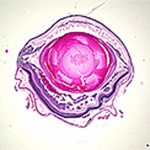
Researchers at the University of California, San Diego School of Medicine have identified a therapeutic target for treating the most common form of eye cancer in adults. They have also, in experiments with mice, been able to slow eye tumor growth with an existing FDA-approved drug.
When she first applied for computer science internships, Brina Lee, who had a bachelor’s in communications from UC San Diego and a background in marketing, felt like she’d hit a wall of rejection. Now fast-forward just two years, and with a master’s in computer science from UC San Diego under her belt, she is the first female engineer to have been hired at Instagram, the company behind the popular image-sharing app.
A global coalition of professors, researchers, publishers, librarians and other scholars is calling for worldwide endorsement of “The Joint Declaration of Data Citation Principles” designed to advance sound, reproducible scholarship and create an enduring scholarly record for the digital age.