The mystartupXX program, a collaboration of the Rady School of Management at UC San Diego and the von Liebig Entrepreneurism Center at the UC San Diego Jacobs School of Engineering is pleased to announce it has been chosen as the recipient of a $50,000 grant from the U.S. Small Business Association (SBA). The announcement was made at the Rady School by SBA Administrator, and Obama Administration Cabinet member, Maria Contreras-Sweet.
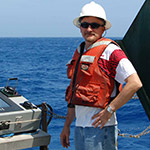
A seismologist who uses seismic waves to create images of the earth’s interior has been selected to receive the 2014 Robert L. and Bettie P. Cody Award in Ocean Sciences from Scripps Institution of Oceanography at UC San Diego. Douglas Wiens, a professor of earth and planetary sciences at Washington University in St. Louis, will present the Cody Award public lecture on Sept. 30 at 3 p.m. in the Robert Paine Scripps Forum for Science, Society and the Environment (Scripps Seaside Forum), 8610 Kennel Way in La Jolla, Calif.
Over 2,000 people attended the 20th ACM SIG International Conference on Knowledge Discovery and Data Mining (KDD 2014), a premier interdisciplinary conference that brought together researchers and practitioners in late August from data science, data mining, knowledge discovery, large-scale data analytics, and big data. Best paper awards were handed out to academic and industry papers, and this year's Industry & Government award went to University of California, San Diego alumna Diane Hu (M.S. '09, Ph.D. '12), who did her doctoral dissertation under Computer Science and Engineering professor Lawrence Saul.
September 1 was the start date of an important new project for two faculty experts in databases and machine learning at the University of California, San Diego. Computer Science and Engineering (CSE) professor Yannis Papakonstantinou in the Jacobs School of Engineering is principal investigator on a $1.1 million new project funded by the National Science Foundation (NSF) to build Plato, a model-based database for compressed, spatiotemporal sensor data. Co-principal investigator on the project is CSE professor Yoav Freund.
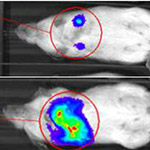
Researchers at the University of California, San Diego School of Medicine have identified an enzyme that controls the spread of breast cancer. The findings, reported in the current issue of PNAS, offer hope for the leading cause of breast cancer mortality worldwide.
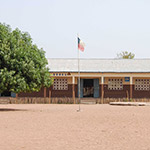
It only takes about $25 to pay for a single child’s secondary school tuition in Benin. Yet even when that money is available (and for many families, it’s not) a lack of economic infrastructure makes getting the funds to the schools a complicated endeavor.