For the second time, The Leapfrog Group has named UC San Diego Health System to its annual list of Top Hospitals. Awarded to hospitals nationwide for demonstrating excellence in hospital safety and quality, the Leapfrog Top Hospital award is an elite distinction given to less than seven percent of all eligible hospitals
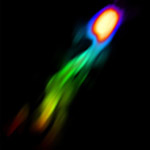
Stars igniting at rates rarely seen in a distant, massive galaxy are blowing cold, dense gas tens of thousands of light years into space, depleting the galaxy's supply of stellar fuel. The loss will limit future star birth, a driver galactic aging for which evidence has been mounting.
Three members of the Jacobs School of Engineering faculty at the University of California, San Diego have been elevated to be Fellows in the Institute of Electrical and Electronics Engineers (IEEE). Computer Science and Engineering (CSE) Prof. David Kriegman was honored for his contributions to computer vision, and CSE Prof. Yuanyuan (YY) Zhou was cited for her “contributions to scalable algorithms and tools for computer reliability.” Electrical and Computer Engineering (ECE) Prof. Young-Han Kim was honored for his contributions to feedback communication and network information theory. All three faculty members are also affiliated with the Qualcomm Institute.
The National Science Foundation (NSF) will profile the UC San Diego-based Center for Aerosol Impacts on Climate and the Environment (CAICE) in a video to be premiered Nov. 21.
UC San Diego Health System and Imperial Valley Family Care Medical Group (IVFCMG) are pleased to announce a comprehensive affiliation that will enhance the depth and quality of multi-specialty health care services and clinical trials available to patients in the Imperial Valley and surrounding communities.
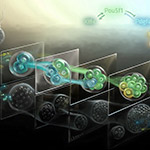
San Diego, Calif., Nov. 25, 2014 -- Bioengineers at the University of California, San Diego have discovered that mouse embryos are contemplating their cellular fates in the earliest stages after fertilization when the embryo has only two to four cells, a discovery that could upend the scientific consensus about when embryonic cells begin differentiating into cell types. Their research, which used single-cell RNA sequencing to look at every gene in the mouse genome, was published recently in the journal Genome Research. In addition, this group published a paper on analysis of ”time-course”single-cell data which is taken at precise stages of embryonic development in the journal of Proceedings of the National Academy of Sciences.