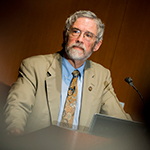
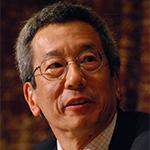
Two congressmen who know a lot about innovation were wowed by last week’s tour of the Qualcomm Institute, where they heard about UC San Diego’s new Office of Innovation and Commercialization and met student entrepreneurs at QI’s prototyping facility.
In the pristine wilds of the Antarctic, the mysterious leopard seal rules the animal kingdom. This polar bear-sized top predator has razor-sharp canine teeth and the ability to greatly impact or even decimate entire communities of its prey, yet very few scientific studies have focused on this species.
Scripps researchers are using sea urchins to help understand proteins relevant to human and environmental health. Cell proteins called drug transporters have been known to prevent chemotherapy and other drugs from reaching cells in disease treatment. Hamdoun and his colleagues have identified the role of a drug transporter in the early life stages of the sea urchin gut. The results could lead to new ways to target cancer drug resistance and to prevent birth defects.
The San Diego Supercomputer Center at the University of California, San Diego, is a recipient of this year’s HPCwire and Editors’ Choice Awards for its new Comet supercomputer that entered production earlier this year as a result of a National Science Foundation grant worth nearly $24 million including hardware and operating funds.
Bioengineer Todd Coleman, from the University of California, San Diego, has been named one of 100 outstanding individuals for 2015 by The Root, a premier news, opinion and culture site for African-American influencers. Other names on the list include tennis player Serena Williams, ballerina Misty Copeland and hip-hop artist Kendrick Lamar. Coleman will present his research at the prestigious TEDMED conference Nov. 18 to 20 in Palm Springs. His talk will focus on multi-disciplinary research and bioelectronics. He is part of the event’s Techno-Utopia session.
In just the past few years, researchers have found a way to use a naturally occurring bacterial system known as CRISPR/Cas9 to inactivate or correct specific genes in any organism. CRISPR/Cas9 gene editing activity runs continuously, though, leading to risk of additional editing at unwanted sites. Now, researchers at University of California, San Diego School of Medicine, Ludwig Cancer Research and Isis Pharmaceuticals demonstrate a commercially feasible way to use RNA to turn the CRISPR-Cas9 system on and off as desired — permanently editing a gene, but only temporarily activating CRISPR-Cas9.