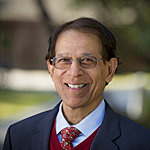
University of California San Diego nanoengineering professor Shirley Meng is the recipient of the 2016 Charles W. Tobias Young Investigator Award from the Electrochemical Society (ECS). The award recognizes a young scientist or engineer who has contributed outstanding theoretical or experimental work in the fields of electrochemistry, electrochemical engineering, or solid-state science and technology.
Cliff Kapono, born in Hawaii, chemistry Ph.D. student at Scripps, avid surfer, will travel around the world to survey and collect samples from surfers to determine if the ocean provides them with unique bacteria and molecules, and what, if any, positive health benefits there are. Working on Rob Knight’s Gut Project
When summertime comes to Antarctica (just when Christmas comes to San Diego), it’s peak season for research in the frozen continent. UC San Diego’s Scripps Institution of Oceanography is always among the research centers there, but this year is special. This year, researchers say that Scripps will have the largest institutional presence in Antarctica of any academic center in the world.
An international team led by University of California San Diego researchers has employed a novel computational approach to design and create a new compound that in laboratory studies has reduced deficits and neurodegenerative symptoms that underlie Parkinson’s disease.
Scientists will convene Oct. 7 at Scripps Institution of Oceanography at UC San Diego to consider the future of one of the world’s longest continuous records of ocean conditions. Managers of the program, which observed the centennial of the first temperature measurement at Scripps Pier in August, will take up the question of how – and if – the program should continue into a second century as it is now and how it can be funded in the future.
Four biologists, a nanoengineer and a biophysicist at UC San Diego today received a total of more than $5 million in grants from the National Institutes of Health to pursue innovative and transformative research projects.