Scientists ‘Game’ for Remote-control Chemistry of the Future
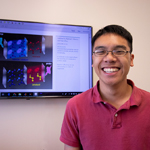
Theoretical chemists at UC San Diego mix molecules and light in optical cavities in a promising study recently published in the Cell Press journal Chem.
Theoretical chemists at UC San Diego mix molecules and light in optical cavities in a promising study recently published in the Cell Press journal Chem.
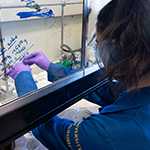
New research from scientists at the University of California San Diego and the University of Michigan has opened a new chapter in the story about what happens between two key metabolic enzymes, setting chemical biologists on their own path to a new understanding of fatty acid biosynthesis.
Why do people around the world come to see some figures as so important, and how have their meanings changed over time? These questions lie at the heart of the new book “Icons of Dissent: The Global Resonance of Che, Marley, Tupac, and Bin Laden.” Author Jeremy Prestholdt explains more in this Q&A.
A new paper by UC San Diego researchers hypothesizes a possible link between cancer-causing viruses.
Gliding through the water with the slow hypnotic beat of their fins, the otherworldly manta rays are a perfect combination of size and grace. These plankton-eating marvels can reach up to 23 feet in wingspan as adults. Yet despite being so conspicuous, these gentle giants are notoriously hard to access and study, so major knowledge gaps remain in their basic biology, ecology and life history.
New preclinical data from University of California San Diego School of Medicine and Moores Cancer Center offers proof-of-principle for a combination immunotherapy that suppresses tumor growth in the liver. Current therapies for liver cancer are largely ineffective, resulting in poor outcomes.
Keep up with all the latest from UC San Diego. Subscribe to the newsletter today.