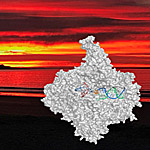
UC San Diego scientists have unraveled a decades-long mystery on how genes are activated. Until activated, human genes are blocked by structures known as nucleosomes, components that serve to package DNA inside cells. Scientists have been trying to determine how these nucleosome roadblocks clear out to allow genes to be turned on. Now, a team of scientists has identified a key factor that partially unravels nucleosomes and clears the way for genes to activate. The identification of “NDF,” or nucleosome destabilizing factor, is described May 14 in the journal Genes & Development. The researchers say the finding provides a new perspective on how genes are turned on and off—knowledge useful in the study of human diseases such as cancer, which can be caused by improper gene activity.
That’s the goal of the All of Us Research Program, which officially opened for public enrollment this week. Led by the National Institutes of Health (NIH), All of Us is an unprecedented effort to gather genetic, biological, environmental, health and lifestyle data from 1 million or more volunteer participants living in the United States. A major component of the federal Precision Medicine Initiative, the program’s ultimate goal is to accelerate research and improve health.
In a new paper, an international team led by scientists at University of California San Diego School of Medicine describe successfully grafting induced pluripotent stem cell (iPSC)-derived neural precursor cells back into the spinal cords of genetically identical adult pigs with no immunosuppression efforts. The grafted cells survived long-term, displayed differentiated functionality and caused no tumors.
Researchers in the Department of Chemistry and Biochemistry at the University of California San Diego mixed together unlikely materials to create a new hybrid form of crystalline matter that could change the practice of materials science. The findings, published in "Nature," present potential benefits to medicine and the pharmaceutical industry.
The All of Us Research Program officially opens for enrollment Sunday, May 6. Led by the National Institutes of Health (NIH), All of Us is an unprecedented effort to gather genetic, biological, environmental, health and lifestyle data from 1 million or more volunteer participants living in the United States. A major component of the federal Precision Medicine Initiative, the program’s ultimate goal is to accelerate research and improve health.
Hafner-Burton’s passion and dedication to protecting human rights carries through her teaching and research. As such, she was selected to be one of six UC San Diego faculty members honored at the 44th annual Chancellor’s Associates Faculty Excellence Awards for going above and beyond to make a positive difference in their teaching, research and service.