The University of California, San Diego is one of the best universities in the world to study international relations, according to Foreign Policy, a highly regarded magazine focused on global affairs, current events, and domestic and international policy.
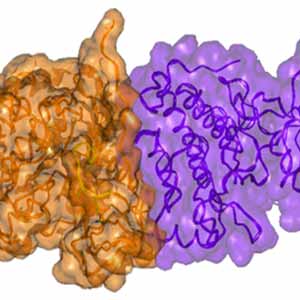
An international team of scientists, led by researchers at the University of California, San Diego School of Medicine, has identified the microtubule-associated protein tau (MAPT) gene as increasing the risk for developing Alzheimer’s disease (AD). The MAPT gene encodes the tau protein, which is involved with a number of neurodegenerative disorders, including Parkinson’s disease (PD) and AD. These findings provide novel insight into Alzheimer’s neurodegeneration, possibly opening the door for improved clinical diagnosis and treatment.
As it has for several years, the University of California, San Diego ranks fifth among top U.S. universities for research and development expenditures, with $1,075,554,000 in expenditures for fiscal year 2013, according to figures just released by the National Science Foundation (NSF).
They call it “the Lab-in-a-Box.” According to Nadir Weibel, a research scientist in the Computer Science and Engineering (CSE) department at the University of California, San Diego, inside the box are assorted sensors and software designed to monitor a doctor’s office, particularly during consultations with patients. The goal is to analyze the physician’s behavior and better understand the dynamics of the interactions of the doctor with the electronic medical records and the patients in front of them. The eventual goal is to provide useful input on how to run the medical practice more efficiently.
The Health Data Exploration project – based at the California Institute for Telecommunications and Information Technology (Calit2) and supported by the Robert Wood Johnson Foundation (RWJF) – has announced five recipients in its $200,000 Agile Research Project competition.