The San Diego Supercomputer Center at the University of California, San Diego, is a recipient of this year’s HPCwire and Editors’ Choice Awards for its new Comet supercomputer that entered production earlier this year as a result of a National Science Foundation grant worth nearly $24 million including hardware and operating funds.
In just the past few years, researchers have found a way to use a naturally occurring bacterial system known as CRISPR/Cas9 to inactivate or correct specific genes in any organism. CRISPR/Cas9 gene editing activity runs continuously, though, leading to risk of additional editing at unwanted sites. Now, researchers at University of California, San Diego School of Medicine, Ludwig Cancer Research and Isis Pharmaceuticals demonstrate a commercially feasible way to use RNA to turn the CRISPR-Cas9 system on and off as desired — permanently editing a gene, but only temporarily activating CRISPR-Cas9.
Christopher J. Kane, M.D., a renowned specialist in prostate cancer and an expert in robotic and other minimally invasive procedures for urologic surgery at the University of California, San Diego, has been appointed the inaugural holder of the Joseph D. Schmidt, MD Presidential Chair in Urology in the School of Medicine.
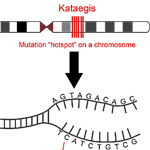
Researchers at the University of California, San Diego School of Medicine developed a method to expand the types of chromosomal abnormalities that noninvasive prenatal testing (NIPT) can detect. The study, published November 9 by Proceedings of the National Academy of Sciences, uses a semiconductor sequencing platform to identify small chromosomal deletions or duplications, such as occur in Cri du Chat Syndrome and DiGeorge Syndrome, with a simple blood test from the expectant mother.
In an effort to advance research on one of the deadliest forms of cancer, University of California, San Diego School of Medicine researchers Andrew Lowy, MD, and Tannishtha Reya, PhD, have been recruited for their expertise in preclinical modeling, clinical trials and stem cell biology to join a “dream team” of international pancreatic cancer researchers.
The Healthy Aging Initiative (HAI), a campus-wide effort to investigate and address the diverse challenges and needs of the nation’s aging population, has announced its inaugural research and education seed grants to seven University of California, San Diego faculty members