UC San Diego Health and Eisenhower Health signed a five-year affiliation agreement to expand cancer services for residents of Coachella Valley. Starting in January 2018, as a member of the UC San Diego Health Cancer Network, patients of Eisenhower Health will have enhanced access to world-class cancer care, both at Eisenhower Lucy Curci Cancer Center and at UC San Diego Health.
Researchers at University of California San Diego School of Medicine, with colleagues across the country and around the world, have used whole genome analyses and chemogenetics to identify new drug targets and resistance genes in 262 parasite cell lines of Plasmodium falciparum — protozoan pathogens that cause malaria — that are resistant to 37 diverse antimalarial compounds.
An international team, led by researchers at the University of California San Diego School of Medicine, has developed and validated a genetic tool for predicting age of onset of aggressive prostate cancer, a disease that kills more than 26,000 American men annually.
Jacobs Medical Center at UC San Diego Health in La Jolla recently received certification from the Joint Commission to be a Comprehensive Stroke Center. This certification is in addition to the existing accreditation at UC San Diego Medical Center in Hillcrest. This expansion makes UC San Diego Health the only health system in San Diego County to have two access points for comprehensive stroke care.
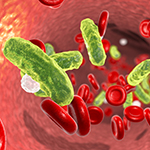
Researchers at UC San Diego have developed macrophage "nanosponges"—nanoparticles cloaked in the cell membranes of macrophages—that can safely remove sepsis-causing molecules from the bloodstream. In lab tests, these macrophage nanosponges improved survival rates in mice with sepsis.
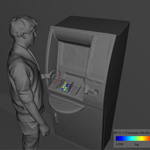
Every day, every inch of skin on your body comes into contact with thousands of molecules — from food, cosmetics, sweat, the microbes that call your skin home. Now researchers can create interactive 3D maps that show where each molecule lingers on your body, thanks to a new method developed by University of California San Diego and European Molecular Biology Laboratory (EMBL) researchers. The technique is published December 21 in Nature Protocols.