Physicians at UC San Diego Health are now offering prostate artery embolization as a new treatment option for men with benign prostatic hyperplasia, or an enlarged prostate. The minimally invasive procedure is an alternative to surgery, with no hospital stay, little operative pain and lower cost.
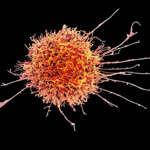
Emerging CAR-T immunotherapies leverage modified versions of patient’s T-cells to target and kill cancer cells. In a new study, researchers at University of California San Diego School of Medicine and University of Minnesota report that similarly modified natural killer (NK) cells derived from human induced pluripotent stem cells (iPSCs) also displayed heightened activity against a mouse model of ovarian cancer.
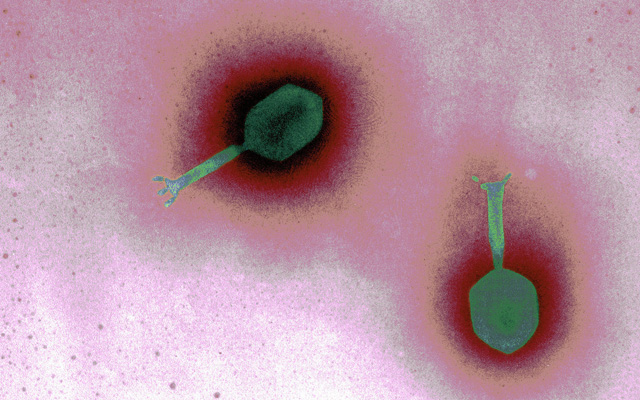
With microbial resistance to antibiotics growing into a major global health crisis, researchers at University of California San Diego School of Medicine, in collaboration with national research institutions and private industry, are leveraging hard-won expertise to exploit a natural viral enemy of pathogenic bacteria, creating North America’s first Center for Innovative Phage Applications and Therapeutics (IPATH).
Researchers at University of California San Diego School of Medicine suggest higher levels of vitamin D are associated with decreasing risk of breast cancer. Their epidemiological study is published in the June 15 online issue of PLOS ONE, in collaboration with Creighton University, Medical University of South Carolina and GrassrootsHealth, an Encinitas-based nonprofit organization that promotes vitamin D research and its therapeutic benefits.
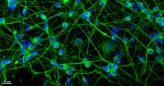
Graphene electrodes could enable higher quality imaging of brain cell activity thanks to new research by a team of engineers and neuroscientists at the University of California San Diego.
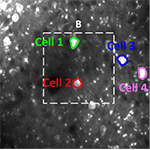
The researchers developed a technique, using platinum nanoparticles, to lower the impedance of graphene electrodes by 100 times while keeping them transparent. In tests on transgenic mice, the electrodes were able to record and image neuronal activity (calcium ion spikes) at both the macroscale and single cell levels.
Neglected tropical diseases are a group of chronic and disabling parasitic infections that primarily affect poor and underserved communities. These diseases affect more than 1 billion people globally, yet are rarely the target of new drug discovery efforts. Leveraging its strengths in molecular biology, clinical research and pharmaceutical sciences, the University of California San Diego has now launched a new Center for Anti-Parasitic Drug Discovery and Development to address this unmet need in global health.