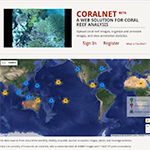
Computer scientists at the University of California San Diego have released a new version of a software system that processes images from the world’s coral reefs anywhere between 10 to 100 times faster than processing the data by hand.This is possible because the new version of the system, dubbed CoralNet Beta, includes deep learning technology, which uses vast networks of artificial neurons to learn to interpret image content and to process data.
In a paper published by Nature Neuroscience, UC San Diego cognitive scientists say they have found neurons that help an animal align itself within a cognitive map of its environment. The neurons signal “I’m on this line, in this orientation.”
The University of California San Diego’s Department of Music is known for its unconventional approach to the art of sound. The fact that soprano Susan Narucki and composer Lei Liang are collaborating to create a chamber opera around the theme of gun violence only fits that reputation. Their unique project entitled, “Inheritance,” struck a note with the National Endowment for the Arts (NEA), which awarded the UC San Diego team an Artworks grant as part of its first $30 million in major arts funding for 2017.
University of California San Diego history professor Frank Biess is interested in emotions. More specifically, he plans to examine the role of fear and anxiety within the historical context of postwar West Germany. The NEH Fellowship for University Professors enables Biess to address questions about how feelings are produced politically, how they impact society and how they change over time—demonstrating the valuable insight humanities scholars can gain when they engage with the expanding interdisciplinary research on emotions.
The innovation ecosystem at UC San Diego will open more opportunities for campus entrepreneurs with the launch of Accelerating Innovations to Market (AIM), an ambitious program that encourages graduate students, postdoctoral scholars, researchers and faculty to develop and commercialize their problem-solving ideas.
Composer and multimedia artist Katharina Rosenberger, a professor in the Department of Music at the University of California San Diego, has been appointed composer-in-residence at the Qualcomm Institute (QI), the UC San Diego division of the California Institute for Telecommunications and Information Technology (Calit2). Rosenberger is the fourth UC San Diego music faculty member to hold the position following Roger Reynolds (2007-2010), Rand Steiger (2010-2013) and Lei Liang (2013-2016). Her recent composition, “tempi agitati,” will be performed Thursday, Dec. 8 at UC San Diego’s Conrad Prebys Concert Hall, by the contemporary vocal quartet, Neue Vocalsolisten.