Simulated Reality, Real Benefits
UC San Diego is reinventing surgery, medical training and patient care — before patients even enter the room.


Published Date
Story by:

Share This:
Article Content
This story is from the 2026 issue of Discoveries, a UC San Diego Health Sciences magazine.
When first-year students at UC San Diego School of Medicine step into the Professional Development Center to do their first simulated patient interactions, they don’t meet a mannequin or a computer program. They meet a person — a simulated patient who is trained to portray everything from new‑onset chest pain to a difficult conversation about recurrent cancer.
Down the hall, in the Simulation Training Center, anesthesiology residents might be practicing a complicated airway rescue on a lifelike mannequin. Another few doors down, at the Center for the Future of Surgery, a surgical team collaborates with engineers to test next‑generation humanoid robots or augmented‑reality (AR) guidance systems for the operating room.
These three centers, tucked away inconspicuously in the basement of the T. Denny Sanford Medical Education and Telemedicine Building, form a unique, highly collaborative ecosystem that has made UC San Diego a global leader in applying simulation and robotics technologies to patient care, physician training and medical innovation. Nearly every corner of UC San Diego’s medical education and research enterprise is touched by simulation. And that’s by design.
“We’re at a point where you can practice almost anything you have to do in medicine in a safe, controlled environment before ever doing it on a patient,” said Preetham Suresh, MD, associate dean of medical education by simulation at the School of Medicine. “It improves safety, confidence and clinical performance. And we’re only just beginning to understand what’s possible.”
Where the art of medicine is refined
The Professional Development Center looks like a regular outpatient clinic, but it’s actually one of the nation’s pioneering hubs for standardized patient (SP) education, where medical trainees practice patient interaction with trained simulated patients. UC San Diego was among the first medical schools in the United States to adopt SP methodology in the 1990s, guided by leaders such as Maria Savoia, MD, former dean of medical education for UC San Diego, and SP innovator Peggy Wallace, PHD.
“Simulated patients aren’t just actors,” said Robert Macaulay, MMHPE, director of simulation education at the center. “Their job is much more complex. They’re trained to portray patients consistently, to give structured feedback and to help students practice the human skills of medicine — communication, counseling and shared decision‑making.”
Today, more than 300 trained simulated patients work with students across all 4 years of medical school and with multiple residency programs. First‑and second‑year students see SPs regularly as part of a formative curriculum, learning to take a patient’s history and perform a physical exam. Third‑and fourth‑year students advance to more sophisticated clinical skills, such as thinking through differential diagnoses, explaining test results and communicating treatment options.
For all trainees, the realism level of these simulations is high.
When a student is telling a simulated patient that their cancer has returned, it doesn’t matter that they know it’s a scenario. “In that moment, it feels real,” said MacAulay. “No amount of study can prepare you for that.”
Residents and practicing clinicians benefit from these resources as well. The center regularly runs advanced communication simulations — everything from handling microaggressions in the clinic to working with interpreters or supporting patients with chronic, complex conditions.
“Medicine is a lifetime of learning,” MacAulay said. “Simulation provides a place to do that without any risks to patients.”

UC San Diego Health emergency medicine physician Akash Desai, MD, demonstrates chest ultrasound technique to residents at the Simulation Training Center. Desai is also fellowship director for the Division of Ultrasound at UC San Diego School of Medicine and director of ultrasound for UC San Diego Health East Campus. Photo by Erik Jepsen
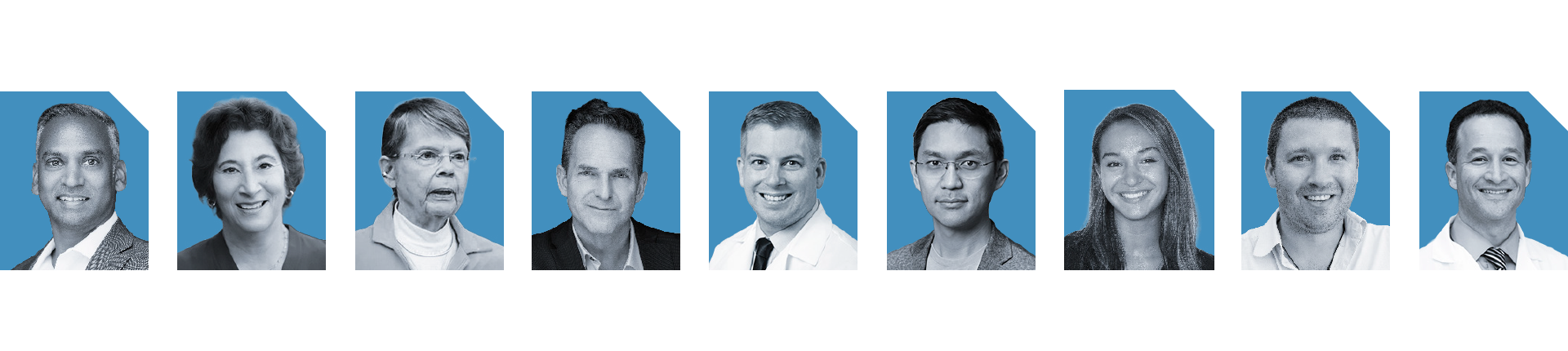
Left to right: Preetham Suresh, MD; Maria Savoia, MD; Peggy Wallace, PHD; Robert Macaulay, MMHPE; Ryan Broderick, MD; Michael Yip, PHD; Taylor Murray, MD; Nadir Weibel, PHD; Brett Meyer, MD
Practicing procedures
While a simulated patient can hone the interpersonal and clinical reasoning skills required for doctors, most medical procedures aren’t feasible to practice on a person. For these procedural skills, such as suturing, intubation, ultrasound and resuscitation, students can go down the hall to the Simulation Training Center. The center houses four multipurpose simulation suites. These rooms look identical to those you’d find in a hospital, including a ward room, emergency or intensive care unit room, operating room and procedural training room. Equipped with high‑fidelity mannequins, ultrasound stations, procedural trainers and everything from airway equipment to emergency response tools, these simulation suites are well utilized by students, faculty and researchers.
Robots have the potential to automate repetitive tasks, freeing clinicians to focus on complex cases or aspects of patient care that only a human can do.
“We run resuscitation training every weekday,” Suresh said. “That’s required for faculty, nurses and staff, but the center is also where students and residents learn rarely encountered, high‑stakes procedures — things like intubation, central lines, spinal taps or bronchoscopy.”
For even rarer procedures or other clinical tasks that don’t already have a commercially available simulator, the center uses 3D printing and partners with engineers on campus to create new ways to practice these important skills. “You name it, we can help you practice it,” Suresh said.
In addition to these activities, the center offers a regular cadence of simulation exercises for students and residents, such as ultrasound practice for internal medicine residents, monthly crisis simulation days for emergency medicine and intraoperative crisis simulations for anesthesia.
Team‑based simulations bring anesthesia and surgery trainees together to manage a shared crisis, such as a hemorrhage during surgery or an airway emergency in the recovery room. These invaluable training opportunities exist because UC San Diego’s simulation spaces were deliberately co‑located, so the varied technologies that enable high-fidelity medical simulation are all within arm’s reach.
“Simulation is a part of every medical school curriculum, but it’s rare to have human simulation, mannequin simulation and surgical simulation all on one floor, and this really sets us apart in terms of what we’re able to achieve,” Suresh said.
In addition to training present and future doctors, the Simulation Training Center is also working to grow and strengthen the field of simulation education by training tomorrow’s simulation educators. In July, the center will welcome its first official simulation fellow, emergency medicine resident Taylor Murray, MD.
“For me, simulation is where education, innovation and clinical care all intersect,” Murray said. “It’s the space where learners become capable clinicians before they ever practice on a real patient.”

Graduate student Lukas Liang uses a technological interface to control the LapSurgie robot, a noninvasive surgical humanoid robot that can be operated remotely. Systems such as LapSurgie can improve precision and dexterity in surgery while reducing physician fatigue. Photo by Erik Jepsen
Murray will spend the year designing simulation curricula, running simulation events, building procedural models and helping departments across the health system innovate new uses for simulation — such as in situ simulations in the emergency department.
“It’s the future of how we teach medicine,” she said. “And UC San Diego is a perfect place to grow this field.”

A medical robot, known as Surgie, demonstrates a suturing task in the lab. Once its robotic components are in place, the suturing itself can be completed through teleoperation. One of the long-term goals of the Advanced Robotics and Controls Lab is to develop technologies that enable surgery to be performed at a distance, allowing for enhanced precision and increasing access to surgical expertise. Photo by Erik Jepsen
Tomorrow’s surgery, today
Nearby, the Center for the Future of Surgery is always buzzing with activity. While some residents practice robotic surgery on state-of-the-art robotic training stations, others may be working on laparoscopic suites to practice an appendectomy, making their first attempts at microsurgery or doing research in the hybrid operating room.
These training opportunities are made possible by the state-of-the-art surgical simulation technologies housed within the center, including one of the world’s densest collections of laparoscopic trainers, surgical robots and next-generation imaging systems, as well as the only simulated hybrid operating room in the nation, allowing for both minimally invasive and traditional surgical procedures to be practiced in one location.
“We are a global leader in advancing procedural techniques through investigation, testing, simulation and education; we’re one of the top surgical training centers anywhere in the world,” said Ryan Broderick, MD, interim director of the center and professor of surgery at the School of Medicine. “We have the same technologies that are being used in hospitals today, not 10 years ago. We have the newest surgical robots, the latest imaging systems and the bandwidth to train hundreds of learners a day.”
The center hosts more than 1,000 courses annually and has trained more than 40,000 surgeons and other health professionals since its founding in 2011.
However, it is not just a training site; it’s also a testing ground for tomorrow’s surgical innovations. For example, in 2023, UC San Diego became one of the first sites in the nation to test surgical applications on the Apple Vision Pro spatial computing platform. While this technology is in the operating room today, it only got there after numerous tests and iterations in simulated procedures at the center.

The operating rooms at the Center for the Future of Surgery showcase leading-edge technology. For example, the multiarmed machines at the back of the room are Da Vinci Xi surgical systems. The Da Vinci Xi is the most widely used multiport robotic surgery platform in the world. Photo by Kyle Dykes
Robotic surgical assistants
The center is also a frequent collaborator for faculty at Jacobs School of Engineering, including engineers developing humanoid robots and other technologies to streamline surgery and various medical procedures.
“We try to identify opportunities for automation in surgery,” said Michael Yip, PHD, professor of electrical and computer engineering and director of the Advanced Robotics and Controls Lab at UC San Diego. “That means everything from AI models for existing surgical robots to new humanoid robots that can assist clinicians in real time with less complex tasks.”
Yip’s flagship medical robot, Surgie, doesn’t look at all like existing surgical robots, which tend to be large, specialized systems with instruments attached to spider-like robotic arms. Instead, Surgie looks more like a person, with two arms, two legs and a pair of humanoid hands.
Also like a person, Surgie is capable of performing multiple tasks rather than being specialized for a single function. In simulations conducted by Yip’s team in collaboration with Suresh, Surgie was able to perform routine clinical tasks, including performing an ultrasound and guiding a needle under imaging. For some tasks, such as holding perfectly still while performing an ultrasound, Surgie can even match or exceed human capabilities.
“A lot of what we do in simulation is about showing what might be possible,” Yip said. “It lets us demonstrate new ideas safely, understand their limitations and figure out how they could eventually work in a real operating room.”
Simulation isn’t an add‑on. It’s the engine driving the future of surgery, medicine and patient care.
Yip emphasized that, despite its name, Surgie is not a surgeon, nor is it replacing these highly trained physicians. Instead, we should think of humanoid robots as automated assistants, able to complete rote, time-intensive tasks with appropriate supervision.
“Robots have the potential to automate repetitive tasks, freeing clinicians to focus on complex cases or aspects of patient care that only a human can do,” said Yip.
When expertise can appear anywhere
If Yip’s humanoid robots are the future of surgical hardware, Nadir Weibel, PHD, is building the operating room of the future.
Weibel, a professor of computer science and engineering and associate faculty director of the Design Lab at UC San Diego, is the mastermind behind ARTEMIS, an augmented‑and virtual‑reality telemedicine system originally developed in partnership with the U.S. Navy.
ARTEMIS uses 3D mapping, optical tracking and extended reality (XR) headsets to make remote surgical guidance feel physically present. By using ARTEMIS, a field medic wearing an AR headset is able to see a holographic, life‑size image of a remote surgeon, who in turn sees a full 3D reconstruction of the patient in VR. This makes it possible for the remote surgeon to help guide the field medic through a procedure that they might otherwise not be sufficiently trained to complete.

At the Center for the Future of Surgery, a medical student practices using the Da Vinci Xi surgical system with a digital simulation platform. The Da Vinci system has revolutionized the capabilities of modern surgery, allowing highly delicate procedures to be performed with minimal risk to the patient. Photo by Kyle Dykes
“It’s like bringing the expert into the room,” Weibel said. “They can point, gesture, annotate in 3D — all in real time.”
In cadaver studies, ARTEMIS allowed novices — including general surgeons and emergency medical technicians — to successfully perform procedures they had never been trained to do, guided entirely through the XR system. Now, the technology is in its next phase of development with the Navy, which is interested in its application in military and emergency medicine.
While you won’t find ARTEMIS being used in your doctor’s office, the concept of transporting medical expertise to patients via augmented reality is already making an impact on patient care. Another project of Weibel’s, co-led by UC San Diego Health neurologist and telemedicine director Brett Meyer, MD, is Holo-Stroke, which uses similar technology to project a hologram of a doctor to patients being evaluated for stroke. Since time is such a critical factor in stroke care, this approach offers the speed of telemedicine but with a more immersive experience for the patient.
Pilot studies of Holo-Stroke have found that patients preferred it to an existing telehealth platform for stroke care, and the system is now being translated into commercial products for health systems through InSightVue, a company co-founded by Meyer, Weibel and UC San Diego computer science PhD candidate Weichan Liu.
Without the testing ground of UC San Diego’s simulation centers, these bold ideas would remain just that.
“We can build the technology,” Weibel said. “But you only learn if it works by putting it next to real clinicians.”
Simulation is not a substitute
Simulation is sometimes misunderstood as a placeholder — a way to approximate “real medicine” until trainees are ready for the genuine article. But across UC San Diego’s medical and engineering landscape, one message comes up again and again: Simulation is not second best. Rather, it’s a tool at our disposal to improve medicine for all.
A mannequin’s vital signs may be generated by software, but the judgment required of a resident managing a crashing airway is exactly the same as in the hospital. Team‑based simulations reveal communication gaps that rarely surface in the chaos of a live resuscitation — until they matter.
“When you can practice, make mistakes and get feedback in a safe environment, everyone wins — learners and patients,” said Suresh. “Every real patient deserves a clinician who’s already made their early mistakes in a safe environment.”
For surgeons and engineers, simulation is also a test bed for innovation — an engine that accelerates the translation of new ideas into safer tools, smarter robots and more intuitive interfaces. It’s where new practices can be tried, refined, iterated and improved before they ever reach a patient’s bedside.
“Simulation isn’t an add‑on,” said Broderick. “It’s the engine driving the future of surgery, medicine and patient care.”
At UC San Diego, that future is now.
Read more news about: School of Medicine, Health Sciences, Design Lab
Share This:


Stay in the Know
Keep up with all the latest from UC San Diego. Subscribe to the newsletter today.
