CIRM Scholars Program Makes California a Rare ‘Powerhouse of Science’ in the United States

Story by:
Published Date
Story by:
Topics covered:
Share This:
Article Content
Nirvay Sah is not your typical medical researcher.
The young father began his medical career treating animals instead of people. He graduated from veterinary school in Nepal in 2016 before moving to Hawaii to study animal science — then to Texas, where he earned his doctoral degree in the physiology of reproduction in 2022.
Now, Sah works as a postdoctoral researcher at the University of California San Diego School of Medicine, where he investigates how creatine supplementation during pregnancy might benefit moms at risk for pre-eclampsia and fetuses that aren’t growing well in the womb.
“I’ve always been fascinated by reproduction,” Sah said. “It’s a lot easier to understand pre-eclampsia and intrauterine growth restriction in human health because of my work as a veterinarian.”
Sah brings his unique perspective to the field of human medicine thanks to the California Institute for Regenerative Medicine (CIRM) Scholars program, which fosters and enhances the research experience of scientists during their doctoral studies.
Its mission: to develop skilled leaders in the field of regenerative medicine who create safe, cutting-edge stem cell treatments for diseases without cure like cancer, diabetes, heart disease and HIV. These treatments are equitably delivered to the diverse residents of California and around the world — with the additional economic benefit of fostering a vibrant biotech ecosystem in the state.
The voter-approved formation of CIRM, a state-funded stem cell research organization, was unprecedented in the U.S., said Alysson Muotri, PhD, professor of pediatrics and director of UC San Diego’s CIRM Scholars program. CIRM — the largest organization of its kind in the world — sets California apart as a “beacon of science in North America — especially in today’s challenging scientific times.”
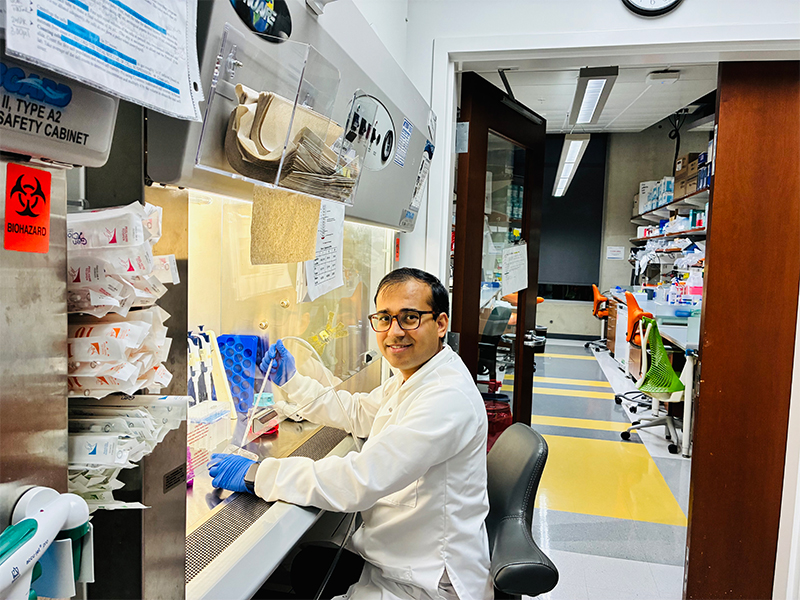
Sah works as a postdoctoral researcher and CIRM scholar at UC San Diego, where he investigates how creatine supplementation during pregnancy might benefit moms at risk for pre-eclampsia.
As federal research funding evaporates — 75% of U.S. scientists are considering leaving the country, according to a March poll by Nature — the CIRM Scholars program fights the tide of departing researchers. It does so via critical funds, programs and opportunities, making California a competitive destination for researchers alongside foreign countries like France, Spain, Denmark, Norway, Canada, Ireland and South Korea — all of which are seeking to lure U.S. researchers, according to the Association of American Universities.
What is regenerative medicine?
In 2004, California voters launched CIRM with the passage of Proposition 71, which authorized $3 billion for regenerative medicine research in the state. In 2020, they reaffirmed their support through the passage of Proposition 14, which provided the program with an additional $5.5 billion. Since 2022, a small percentage of that money — $5 million — has funded the current CIRM Scholars program at UC San Diego, supporting 24 trainees so far, including 10 doctoral students, 11 postdoctoral fellows and three clinical trainees. An additional 12 trainees will be brought on in 2026 with these funds.
But just what is regenerative medicine, precisely? Most people would be hard-pressed to define the new, rapidly expanding field, around which much misinformation exists. While regenerative medicine, also referred to as stem cell science, holds immense potential to help those with myriad medical conditions — from spinal cord and orthopedic injuries to life-threatening conditions like heart failure and cancer — it doesn’t offer instant results, miracle cures or the complete restoration of health. It’s not capable of turning back the proverbial hands of time to reverse aging.
Legitimate regenerative medicine research, such as that funded by CIRM, involves the use of stem cells to repair or replace damaged, disease-causing cells and tissues. Most cells in the human body have a particular function — muscle cells contract, nerve cells transmit signals and skin cells protect the body. They are unable to renew themselves indefinitely or transform into other types of cells.
Stem cells are special for two main reasons: They can self-renew for much longer — perhaps for the entire life of an organism. They can also turn into other types of cells — almost any type of cell in the body. Scientists are just beginning to understand the power of these oddities. What’s more, they continue to discover new kinds of them in the human body.
The most commonly used type of stem cells are called “induced pluripotent” stem cells or iPSCs. Scientists create iPSCs from skin or blood cells, typically from the cells of consenting patients. They’re reprogrammed, so to speak, backward into stem cells using genes normally active in embryonic stem cells, often via viral vectors, then forward into whatever type of cells are necessary for research or treatment. Skin cells from a patient with Alzheimer’s disease can be used to create a miniature brain that gives researchers an unprecedented glimpse into the functioning of their neural network. Blood cells can be used to create patches of cardiac stem cells that can help patients in need of a new heart hold out for a transplant — and, perhaps someday, generate new organs altogether.
CIRM scholars as critical human infrastructure
In its two-decade long history, CIRM has funded more than 100 regenerative medicine clinical trials on more than 85 medical conditions; played a pivotal role in the establishment of more than 50 start-up companies by funding research projects; and launched nearly 120 studies that have become official U.S. Food and Drug Administration-approved clinical trials, paving the way for new treatments.
Such accomplishments would not be possible without CIRM scholars — the “glue” that holds the organization together.
“CIRM scholars play a key role in fostering collaborations across different laboratories, helping to bridge scientific efforts and promoting interdisciplinary teamwork,” Muotri said. “Without these vital participants in our research ecosystem, many promising and ongoing projects would come to a standstill.”
What’s more, the CIRM Scholars program doesn’t just help keep U.S. scientists in the U.S. It also helps the U.S. maintain a competitive edge by attracting the best and brightest budding scientists from abroad. Because the CIRM Scholars program doesn’t have a U.S. citizenship requirement, California-based institutions that host such student-professionals can select from “a large pool of international talent and attract them to California,” Muotri said.
One such pick: Silvia Vicenzi, PhD — a CIRM scholar who studies multiple myeloma, a blood cancer that affects plasma cells, and Waldenstrom macroglobulinemia, a type of non-Hodgkin lymphoma — in the lab of Leslie Crews, PhD, assistant professor in the Division of Regenerative Medicine at UC San Diego School of Medicine.
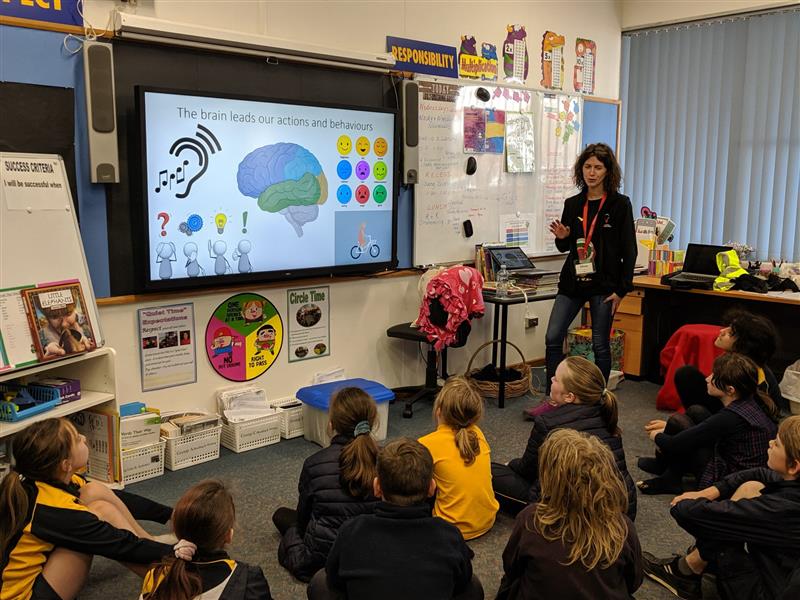
Vicenzi, a CIRM scholar at UC San Diego, is on a mission — not only to contribute to the development of therapies for terminal cancers, but to educate members of the public about the crucial nature of scientific research.
A native of Italy, Vicenzi didn’t encounter a laboratory scientist until her undergraduate days in London — a rendezvous that changed her professional trajectory. Determined to become a biomedical researcher, Vicenzi obtained her master’s degree in molecular medicine in Sweden, where European students can study for free. After obtaining her doctoral degree in molecular neurobiology in Australia, the CIRM Scholars program drew her to San Diego, where her research contributes to the fields of cancer biology and stem cell aging.
Here, Vicenzi is on a mission — not only to contribute to the development of therapies for terminal cancers, but to educate members of the public about the crucial nature of scientific research. She frequently offers demonstrations for students, bringing with her technology that allows her to quickly inform them if they carry the genes for lactose intolerance or the detection of bitter taste, in a bid to pique their interest in science. Additionally, she hosts hands-on workshops for people of all ages, during which she dissects the complex concepts of neuroscience, stem cells and aging into digestible, memorable takeaways.
Vicenzi finds such educational visits “important and extremely rewarding, to see the spark in the eyes of students when you show them the read-out of their DNA,” she said. “Their jaw will drop and they’ll say, ‘Woah.’”
Even more rewarding: encountering the same students a few years later, as they’re embarking on their collegiate scientific studies. “It’s incredible to see the impact, the ripple effect you can have by just spending a couple of hours with them,” she added.
Vicenzi also dedicates time to attending support groups for people living with the cancers she researches. Such meetings are mutually beneficial, she said, giving patients hope and researchers new ideas.
“You build trust and a personal connection with them that goes beyond research,” Vicenzi said. “They give me the energy to get out of bed every morning and be so happy and joyful to work on these very challenging conditions.”
Another critical aspect of CIRM scholars’ outsized impact: publications. CIRM scholars at UC San Diego have contributed to 17 publications over the past three years on topics like advancing models of psychiatric disorders with human brain organoids and creating targeted therapeutics for melanoma and diabetes.
Perhaps most importantly, their work lays the foundation for clinical trials — 22 of which are open for enrollment at UC San Diego’s CIRM Alpha Clinic — for conditions like HIV/AIDS, Parkinson’s disease, epilepsy, multiple sclerosis and cancers like melanoma and advanced or metastatic solid tumors.
“CIRM scholars are the embodiment of hope for the one in three Californians living with at least one chronic health condition,” Muotri said. “The more scholars we have, the more innovative treatments we’ll be able to offer that hopefully improve quality of life and extend it.”
You May Also Like




Stay in the Know
Keep up with all the latest from UC San Diego. Subscribe to the newsletter today.
