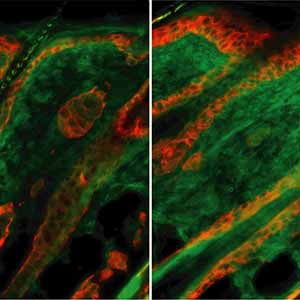
An international team of researchers has identified a new molecule involved in skin fibrosis, a life-threatening disease characterized by the inflammation and hardening of skin tissue. The new study is the first to investigate the role of this molecule in skin fibrosis and paves the way toward new and improved therapies for the disease.
More than 1,000 computer science students gathered in a massive air-conditioned tent at UC San Diego’s Triton Track and Field Stadium Oct. 2-4 for the first-ever SD Hacks competition. The 36-hour round-the-clock hackathon challenged student teams to generate innovative working projects or “hacks” that rely on software, biotechnology, virtual reality, and more.
Roughly one in nine people on Earth do not have enough food to eat. And climate change is only making it harder for farmers to meet the global demand for food, according to the Intergovernmental Panel on Climate Change (IPCC). By 2030, the IPCC expects climate change to reduce crop and pasture yields by as much as 14 percent in some parts of the world. Adapting crops, livestock and fisheries will be critical for global food security.
UC San Diego Health and Tri-City Healthcare District announced today that they have entered into an exclusive, long-term strategic affiliation designed to enhance the delivery of high quality health care to patients in North San Diego County.
The most severe strep infections are often the work of one strain known as M1T1, named for the type of tentacle-like M protein projecting from the bacterium’s surface. Researchers at University of California, San Diego School of Medicine and Skaggs School of Pharmacy and Pharmaceutical Sciences have uncovered a new way M1 contributes to strep virulence — the protein’s ability to hold off antimicrobial peptides. The study is published October 14 by Cell Host & Microbe.
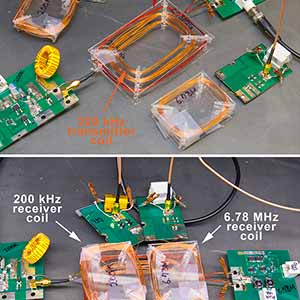
A wireless charger that’s compatible with different consumer electronics from different brands is one step closer to becoming a reality thanks to research by electrical engineers at the University of California, San Diego. Researchers have developed a dual frequency wireless charging platform that could be used to charge multiple devices, such as smartphones, smartwatches, laptops and tablets, at the same time — regardless of which wireless standard, or frequency, each device supports.