Fusion Engineering Institute Researchers at UC San Diego Win Two Prestigious APS Awards
The awards celebrate key advances in plasma physics that significantly advance commercial fusion energy
Media contact:
Published Date
Article Content
Two faculty at the University of California San Diego’s Fusion Engineering Institute were recently recognized with prestigious awards from the American Physical Society (APS) for substantially advancing progress towards commercial fusion energy.

Alessandro Marinoni
Alessandro Marinoni, a UC San Diego professor in the Jacobs School of Engineering’s Department of Mechanical and Aerospace Engineering, was part of a team of seven researchers from the U.S. Department of Energy’s DIII-D National Fusion Facility that won the John Dawson Award for Excellence in Plasma Physics Research from the American Physical Society. The award recognized their successful demonstration of the viability of negative triangularity for commercial fusion. Read the full DIII-D news release about this award.

The 2026 John Dawson Award for Excellence in Plasma Physics Research went to Patrick Diamond
And UC San Diego Fusion Engineering Institute researcher Patrick Diamond, a distinguished professor of Astronomy & Astrophysics and Physics, was awarded the James Clerk Maxwell Prize for Plasma Physics, also from APS. Diamond was recognized for theoretical contributions to the statistical dynamics and self-organization in plasmas, especially experimentally confirmed predictions of predator-prey interactions between turbulence and emergent zonal flows near the LH transition and the ExB staircase in confined magnetized plasmas.
"I am pleased and honored to receive this award,” said Diamond. “I'm especially happy to see one of my favorite subjects, namely reduced modelling of drift wave–zonal flow dynamics, cited, and I'm glad to see a newer subject mentioned, namely the ExB staircase. Profuse thanks go to my mentors, co-workers, and colleagues. These are too numerous to name individually, but most definitely are appreciated."

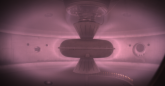
The DIII-D Negative Triangularity Team. (l-r) Alessandro Marinoni, UC San Diego; Kathreen Thome, General Atomics; Al Hyatt, General Atomics; Max Austin, University of Texas at Austin; Filippo Scotti, Lawrence Livermore National Laboratory. (top inset) Carlos Paz-Soldan, Columbia University; (bottom inset) Oak Nelson, Columbia University. Photo courtesy of DIII-D.
Negative Triangularity
“Negative triangularity defaults to fail-safe operation, which is crucial in a nuclear device. We have worked on this concept for many years, starting with pioneering work on the TCV tokamak with our Swiss colleagues and continuing on DIII-D,” said Marinoni. “It is rewarding to see the fruits of this international effort, and thrilling to see the fusion community recognize its promise for a future fusion power plant.
In addition to Marinoni, the DIII-D team that demonstrated negative triangularity included researchers from General Atomics, University of Texas at Austin, Lawrence Livermore National Lab, and Columbia University. Their research focused on tokamaks, donut-shaped devices that contain plasmas reaching over 100 million degrees Celsius with magnetic fields to drive fusion reactions, which are one of the leading designs for commercial fusion pilot plants (FPPs). Most development of operational approaches for tokamaks has focused on optimizing operation in positive triangularity, a D-shaped plasma with the curve facing the outer edge of the device. Positive triangularity plasmas can achieve high confinement, an important feature for power generation; however, these plasmas have notable challenges related to power handling that have yet to be solved for commercial power generation. Operation with lower confinement improves heat flux and power handling issues, with the trade-off of lower performance that would ultimately mean less power output for electricity generation.
An alternative solution is to move away from the positive triangularity shape altogether, operating the plasma in a reverse-D shape called negative triangularity (NT). Building on foundational work performed at TCV, Max Austin, Research Scientist at University of Texas at Austin, and Alessandro Marinoni, a mechanical engineering professor at UC San Diego, led initial NT experiments at DIII-D. They showed high performance without the development of instabilities that cause large releases of particles and heat (known as edge-localized modes, ELMs). These initial experiments motivated a dedicated campaign to fully explore NT, developing strongly shaped diverted plasmas under FPP-relevant conditions.
Marinoni also made key experimental contributions, including identifying a mechanism responsible for the inhibition of ELMs and exploring how the observed NT confinement would extrapolate to an FPP. The work led by these scientists, showing simultaneous achievement of high performance in the plasma core with mitigated heat flux at the divertor, demonstrates that NT operation can achieve key features required for future FPPs.
Share This:


Stay in the Know
Keep up with all the latest from UC San Diego. Subscribe to the newsletter today.
